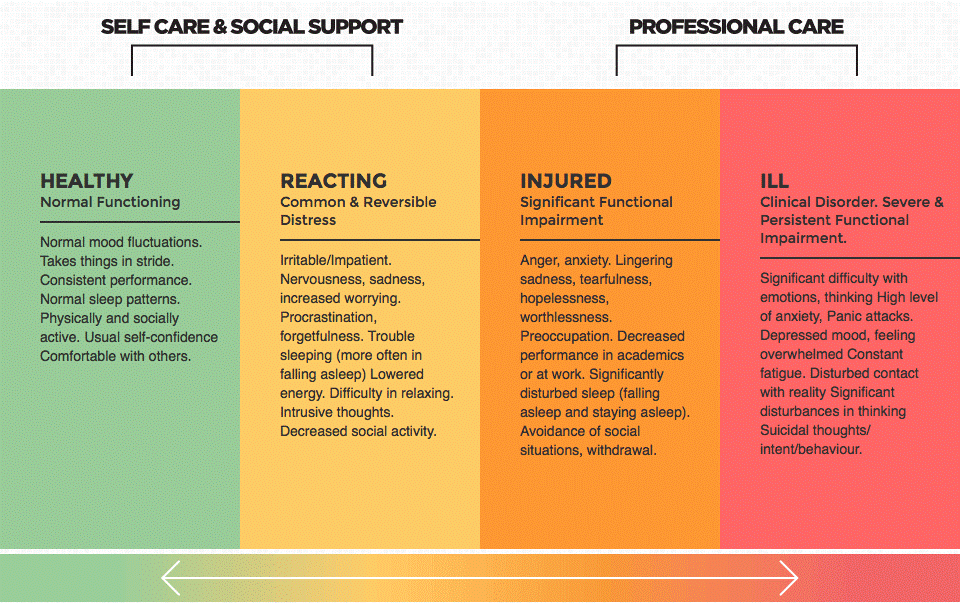
It’s a startling fact that one in four people will experience some form of mental health challenge in their lifetime. This statistic highlights the fact that business leaders must develop a good understanding of the impact of mental health issues on productivity. Mental health should be viewed as a spectrum. Anyone could experience a range of emotions, from mild stress to more serious conditions that require professional help. By building a better understanding of this spectrum, HR and Business Leaders can better support teams, thus reducing absenteeism and the costs associated with long-term sickness leave.
The mental health continuum reflects various stages of emotional well-being. For instance, many individuals may feel low or anxious due to work-related stress or personal challenges. These feelings can often be temporary, but if left unaddressed, they can develop into more severe mental health issues. Recognising the early signs of distress is crucial. Team Leaders play a vital role in responding properly to this early level of distress. If trained in simple mental health management skills Line Managers can actively assist in supporting individuals to be healthy.
As a response to these challenges, many organisations in the UK are beginning to implement mental resilience training within their workforce. This proactive approach not only benefits individual employees but also contributes to a healthier, more productive workplace, which in turn enhances profitability.
Preventative mental health coaching and training offer significant benefits over and above traditional Employee Assistance Programmes. Delivering in-person workshops amplifies the effects of EAPs and digital mental health platforms. Helping individuals build resilience before they face serious challenges is far more effective than providing therapy or medical intervention after mental challenges become serious, leading to higher levels of absence from work.
Research shows that once someone has experienced a mental health disorder, they are at a higher risk of relapse. This fact is an important consideration when planning staff well-being initiatives. Prevention in this case is significantly better than a cure.